Closing? W-2s are due with your last 941, not in January
New York's closing-notice law starts at 50 employees, not 100, and New Jersey adds a week of severance per year of service even with full notice.

Nobody opens a restaurant planning to close it, so almost nobody knows how to do it well. It's more common than the famous numbers suggest, though, and it's worth a few pages of thought before you ever need them.
The "90% of restaurants fail in the first year" line is a myth. It traces to a 2003 credit-card advertisement with no data behind it. The best-known study, of 2,439 restaurants in Columbus, Ohio, found 26% closed in their first year and about 59% within three. Federal labor statistics for accommodation and food service establishments show 88% surviving their first year and about 42% surviving ten. Most restaurants that close have been open for years, with staff, leases, gift cards in circulation and deposits on the books.
The order you do things in decides which of those obligations stay with the business and which follow you personally. Here is the order that protects you.
1. Before you announce anything: notice laws
The federal WARN Act requires 60 days' notice of a closing, but it applies only to employers with 100 or more employees, not counting part-time staff, and a closing that affects 50 or more employees at one site. Part-time is defined as under 20 hours a week or under six months on the job. Many restaurants fall below the federal threshold for that reason alone.
State laws reach further down:
| State | Who's covered | Notice | Notable |
|---|---|---|---|
| New York | 50+ full-time employees in the state; triggered when 25+ lose jobs at a site | 90 days | |
| New Jersey | Triggered when 50+ lose jobs in the state | 90 days | Mandatory severance of one week per year of service, plus four more weeks if notice was short |
| California | Establishments with 75+ employees, part-time staff included | 60 days | Penalties up to $500 a day |
| Illinois | 75+ full-time employees | 60 days | Back pay up to 60 days |
New Jersey's severance applies even when you give full notice, which makes it a closing cost to budget, not a penalty to avoid. Check your state before you tell anyone, because the notice clock starts from when you give notice, not from when you decide.
2. Pay your people first, and on time
Final paychecks are due fast, and in some states on the last day:
- California: immediately on discharge. Each late day costs a day's wages, up to 30 days.
- Massachusetts: in full on the day of discharge.
- Colorado: immediately.
- Texas: within six calendar days.
When cash is tight at the end, payroll goes first. Late final wages turn into penalties quickly, as California's daily charge shows.
3. Trust-fund taxes before any other creditor
Income tax and the employee share of Social Security and Medicare that you withheld from paychecks were never your money. If they aren't paid over, the IRS can collect 100% of them from any "responsible person" who chose to pay other creditors instead: owners, officers, anyone who signed checks. That liability survives the business, the LLC and a dissolution. I covered the mechanics in the entity structure post.
The rule for closing is simple: withheld taxes and collected sales tax get paid before the produce vendor, the landlord or anyone else.
4. File the final returns, on the closing timeline
This is where the title comes from. Closing moves your payroll filing deadlines earlier.
- Final Form 941: check the box saying the business has closed, and enter the date final wages were paid. Attach a statement naming who will keep the payroll records and where.
- Final Form 940: check the box marking it final.
- W-2s: due to employees by the due date of your final 941, not the usual January 31. File the W-3 with them.
- Form 8027, if you're a tipped establishment that files it.
- Sales tax: notify your state, file a final return, and report the sale of equipment and fixtures if your state taxes it. In California, a buyer of the business must withhold part of the price unless you obtain a tax clearance certificate, which can take 60 days or more.
5. Stop taking customers' money for the future
Once you've decided to close, stop selling gift cards and stop taking event deposits. What you've already taken needs a plan.
Gift cards. I didn't find a state law that requires cash refunds of gift card balances when a business closes. But unused balances are unhappy customers and consumer complaints, and state rules still apply. California, for example, bans expiration dates and requires cash back on balances under $15. Unclaimed-property rules for gift cards vary a lot by state, and many exempt them. Announce a last date for redemption, honor cards until then, and ask your accountant about your state's escheat rules for anything left.
Event and catering deposits. A deposit for an event that won't happen is a refund obligation. If the business ends up in bankruptcy, consumer deposits get priority only up to $3,800 per person for cases filed since April 2025. Anything above that is an ordinary unsecured claim, which usually means cents on the dollar. Refund deposits before the business runs out of cash, not after.
6. The lease is the biggest number you guaranteed
A standard personal guarantee on a lease runs for the full term, whether or not the restaurant is open. If your lease has a "good guy" guaranty, your liability can end when you leave, provided you follow its terms, typically:
- written notice, often 90 days;
- rent paid through the surrender date;
- the space vacated broom-clean and the keys returned.
Miss one of those conditions and the guaranty may not release you. Read yours now; the lease negotiation post explains how the clause works.
7. Sell what has value
The liquor license can be the most valuable thing you own, and in quota states it can be sold separately from everything else. A broker estimate puts New Jersey retail consumption licenses at $500,000 to $1.5 million. Transfers need regulator approval, which takes one to six months, so start early. The valuation side is in the buying and selling post.
Equipment you own can be sold; equipment you lease goes back under the lease terms, often with a buyout or early-termination charge.
8. Keep the records
- Payroll records: at least three years under federal wage law.
- Employment tax records: at least four years after the tax was due or paid.
- Sales tax records: California requires four years after the account closes; check your state.
Name the person who holds them. The IRS asks for that on the final 941.
What I'm not going to give you
Advice on whether to file for bankruptcy. That's a question for a bankruptcy lawyer, and the answer changes the order of several steps above.
Your state's full rules. Notice, final pay, gift card and escheat laws all vary by state. The examples above show how much.
A timeline. It depends on your lease, your license and whether you're selling the business or closing it.
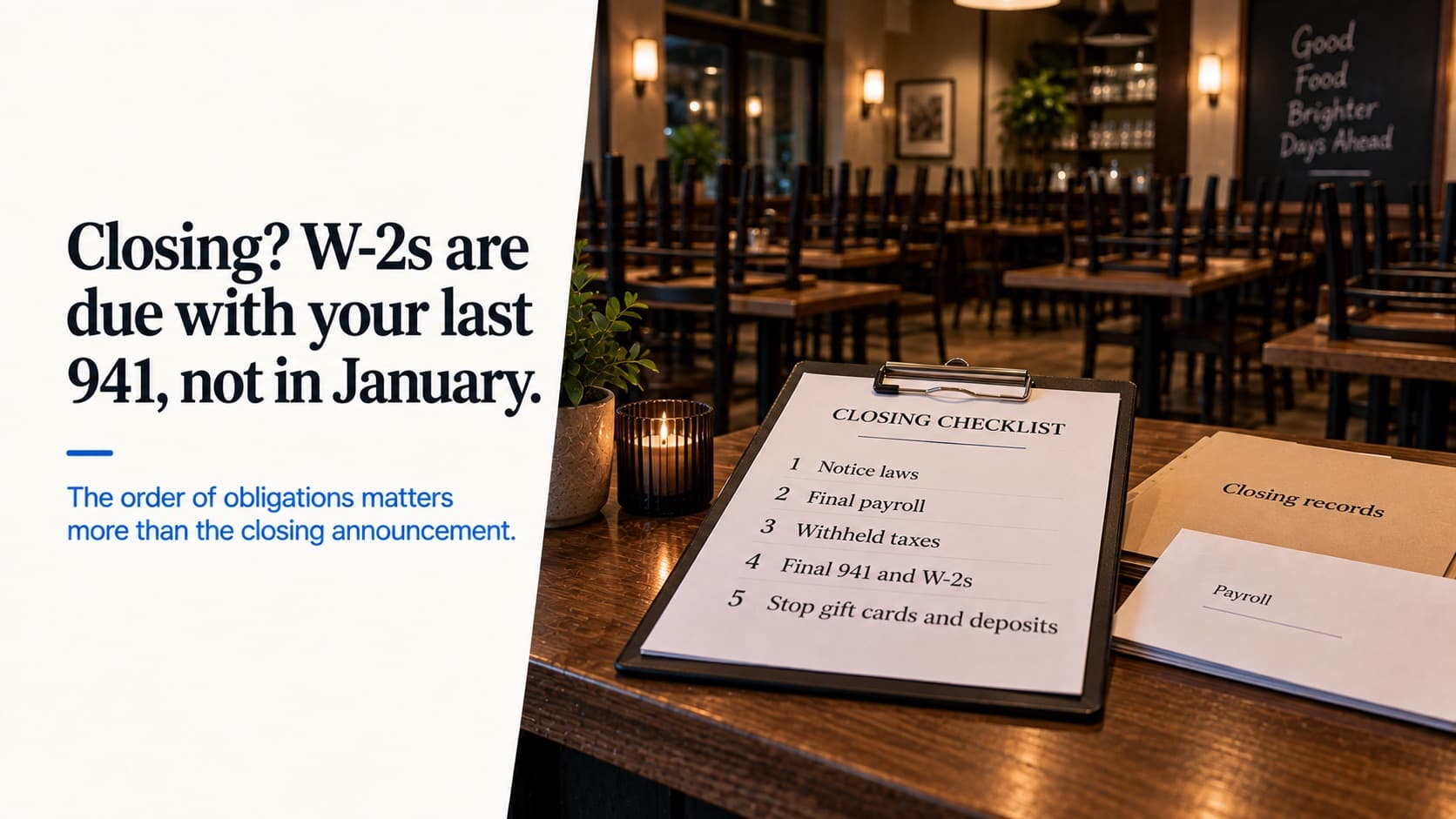
The order, in one list
- Check notice laws before telling anyone.
- Budget severance if you're in New Jersey.
- Run final payroll on time.
- Pay withheld taxes and collected sales tax before other creditors.
- File the final 941 and 940, and issue W-2s by the final 941 date.
- Stop selling gift cards and taking deposits.
- Refund event deposits while there's cash.
- Follow your lease guaranty's surrender conditions to the letter.
- Start the liquor license transfer.
- File the final sales tax return.
- Store the records and name the custodian.
Disclosure: I work at Katalyst, and we sell restaurant POS software. Nothing here depends on your system, except that your POS holds the gift card balances, deposits and sales tax figures you'll need for steps 6, 7 and 10. Export them before you cancel the subscription.
Topics
See how Katalyst handles your service style
A 30-minute walkthrough of the platform, tuned to how your restaurant actually runs.