The real cost of third-party delivery — and how to take orders commission-free
DoorDash, Uber Eats, and Grubhub commission tiers, the all-in effective rate after fees, the margin math, and how first-party ordering changes the equation.


The third-party delivery apps solved a real problem — they put your restaurant in front of millions of hungry people you'd never reach otherwise. They also take a bite of every order that, on the math most restaurants actually run, can exceed the entire profit on that order. Both things are true at once, and the operators who win at delivery are the ones who understand the trade precisely instead of treating the apps as either salvation or villain.
I've run the delivery-margin spreadsheet for restaurants more times than I can count, and the pattern is always the same: the headline commission is not the number that hurts. The number that hurts is the effective rate after everything is netted out — and the lever that fixes it is channel mix, not rate negotiation.
All percentages below are of the order subtotal unless noted; treat them as current to mid-2026, because the apps change them often.
The headline commissions
Each marketplace runs tiered plans. The higher the tier, the bigger your delivery radius and visibility — and the bigger the cut:
| Platform | Marketplace delivery commission |
|---|---|
| DoorDash | Basic 15% · Plus 25% · Premier 30% (+6% pickup) |
| Uber Eats | Lite 20% · Plus 25% · Premium 30% (+7% pickup) |
| Grubhub | Plus 15% · Premium 20% (+~10% when Grubhub delivers) |
A few things worth knowing: Uber Eats raised its entry tier to 20% in March 2026, the first big change since the tiered model launched. The mid-tier (around 25%) is the one most operators actually end up on, because the basic tier's tiny delivery radius starves you of orders. And the apps charge no monthly fee or contract — the commission is the business model.
The number that actually hurts: the effective rate
Here's where operators get surprised. The commission is the start of the cost, not the end. Layered on top:
- Payment processing — roughly 2.5–3% plus a per-order charge.
- Sponsored placement and promotions — deducted from your payout, often without a clean line item, and most restaurants need them to generate volume, which quietly raises the real rate.
- Refunds and chargebacks — when a customer complains, you frequently eat it.
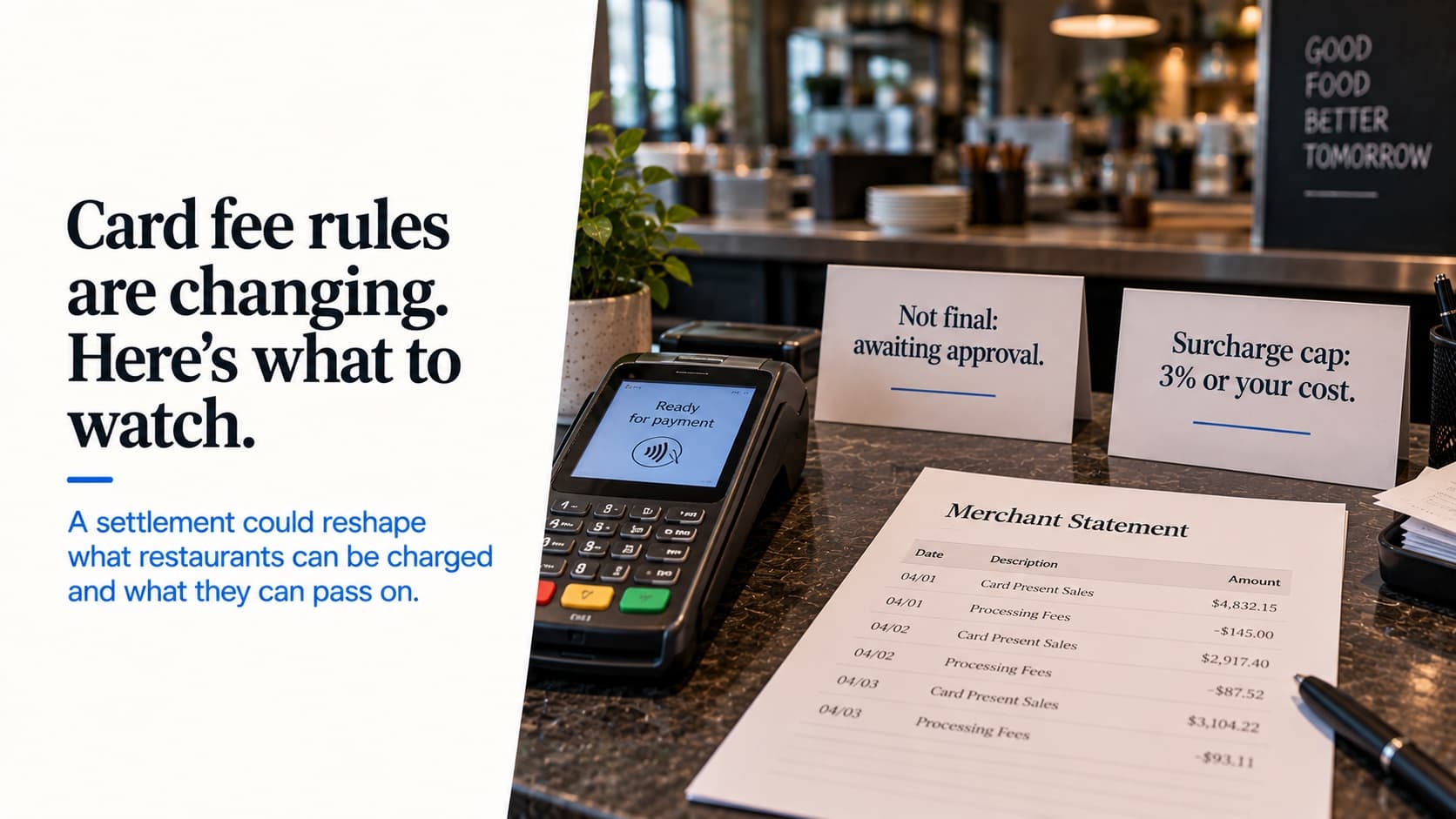
Net it all out and the effective rate commonly lands at 30–40% of the order total. One widely-cited worked example: a restaurant that grossed $10,000 in app orders was deposited $6,800 — a 32% effective rate, not the 25% on its plan. The rule of thumb operators learn the hard way is that your real rate runs five to ten points above your headline commission.
The margin math, said plainly
This is the part that matters, and it's just arithmetic. The average restaurant runs a net margin of roughly 3–9% — full service toward the low end, quick service higher. Now put a 25–30% commission against that:
On a $20 order at a 15% food-and-controllable margin, you're keeping about $3. Take 25% commission and you're left with roughly fifty cents — an 80%-plus haircut on the profit of that order. At a 30% effective rate against a 3–5% net margin, a delivery order can be break-even or a loss unless you've priced for it.
And it gets worse before it gets better, because not all delivery sales are new. Stanford research found only 30 to 50 cents of every delivery dollar is incremental — the rest cannibalizes higher-margin dine-in and pickup business you'd have gotten anyway. So you're often paying a 30% toll on sales that partly weren't new to begin with. This is the same off-premise wave I wrote about in the 53% shift — off-premise is now roughly three-quarters of all restaurant traffic, so this isn't a niche channel you can ignore. It's most of the business, which is exactly why the toll on it matters so much.
What operators do about it: raise app prices
The near-universal response is to mark up the in-app menu. Most restaurants list delivery-app prices 15–25% above dine-in, with about 15% the common average. The honest math is even starker: to fully offset a 30% commission you'd need roughly a 43% markup, because the markup itself gets commissioned.
Markups work, but they have a ceiling — price too far above your dining room and order frequency drops, and the apps themselves push back on big gaps because it hurts their conversion. Markup is a patch on the leak, not a fix for the plumbing.
The fix: own the channel
Here's what the apps don't advertise. Each of them also offers a commission-free, first-party version — because they'd rather take your processing fee than lose you entirely:
- DoorDash Storefront — 0% commission on orders through your own site; you pay only card processing (around 2.9% + $0.30).
- Uber Direct / Webshop — white-label ordering and on-demand courier dispatch on a per-delivery basis, no commission.
- Grubhub Direct — a branded, commission-free ordering page.
And your own online ordering system does the same thing without renting the relationship from anyone: a guest who orders through your website costs you only the processing fee — call it 3% instead of 30%. The demand is already there; surveys put 56% of consumers ordering delivery directly through restaurant websites when the option exists.
The strategic frame that actually works: treat the marketplaces as paid customer acquisition, not as your ordering channel. Let them introduce you to a new guest at their 25–30% rate, then use the receipt, the bag insert, and the follow-up to move that guest's second order onto your own commission-free channel. The operators running healthy 15–20% margins are the ones keeping marketplace orders under roughly 40% of volume and pushing repeat business direct. Pizza is the cautionary tale and the proof — it has the highest off-premise share of any concept, which is why a direct ordering channel for a pizzeria isn't optional, it's the margin.
A note on the fee caps
If you've heard cities "capped" delivery fees, be careful — that map shifted. Several cities passed pandemic-era caps (San Francisco at 15%, plus Seattle, Denver, D.C., Los Angeles, and others), and many remain. But New York City — the most-cited example — replaced its old 20% hard cap in mid-2025 with a structure that, with optional "enhanced services," can climb far higher. Don't assume your city's cap is what it was two years ago, and don't build a delivery strategy on a cap surviving; build it on owning your channel.
The bottom line
Disclosure: I work at Katalyst, and we build commission-free online ordering, so I have a horse in this race. But the arithmetic is the arithmetic, and it doesn't care whose logo is on the terminal: a 30% effective rate against a 5% net margin is a structural mismatch no amount of rate-shopping fixes. Use the marketplaces for what they're genuinely good at — reach — and route the repeat business onto a channel you own. The goal was never to quit the apps. It's to stop paying acquisition prices on customers you've already acquired. If you want that direct channel costed against your current app mix, we'll run the numbers on your actual volume.
Related Katalyst products
Topics
See how Katalyst handles your service style
A 30-minute walkthrough of the platform, tuned to how your restaurant actually runs.