How to reduce restaurant no-shows: reminders, holds, and deposits that actually work
The real cost of an empty reserved table, the mitigation tactics ranked by measured impact, and how to apply them without scaring off your regulars.


A no-show is the most expensive empty seat in the building, because you turned away a walk-in to hold it. You prepped for the cover, you staffed for the cover, and then the cover simply didn't arrive — and unlike a slow night, you actively declined other business to protect the table. It's a loss you chose, on purpose, for a guest who never showed.
I've run the numbers on this for operators who were losing real money to it and treating it as the weather — something that happens to you. It isn't. No-shows respond to specific, measurable tactics, and the data on which ones work is unusually good. Here's the operator's version: what an empty reserved table actually costs, the tactics ranked by measured impact, and how to use them without making your regulars feel like they're booking a flight.
What it actually costs
Industry estimates put the no-show rate at roughly 10–20% for restaurants running no mitigation — about one reservation in five. (Platform-wide benchmarks run lower, around 3–4%, because they include a lot of low-risk casual bookings; the 10–20% figure is the world of prime-time, hard-to-rebook tables, which is exactly where the money is.)
Put a check average on it. At $45 a head, a 10–20% no-show rate is roughly $450–$900 in lost revenue a night, and conservative annual estimates land north of $39,000 per location. The margin context is what makes it urgent: with restaurant net margins around 3–5%, a service is built on thin profit, and just six no-shows can erase the profit of a 40-seat dining room for the night. The lost covers are only part of it — add the prepped food now headed for the bin and the staff you scheduled to a count that didn't materialize.
The tactics, ranked by measured impact
The good news: there's a clear ladder of interventions, and the data behind it is first-party operator data, not guesswork. From lightest touch to strongest:
1. Confirmations and reminders (do this no matter what)
The cheapest win. Automated SMS confirmations and reminders cut no-shows by roughly 27–38% in vendor data, and 36% of guests who missed a reservation said they'd have shown up had they been reminded. Use text, not just email — SMS open rates run around 98% (most within minutes) versus under 20% for email. This is table stakes: every restaurant taking reservations should send a reminder with a one-tap confirm-or-cancel. You'll recover cancellations early enough to rebook the table, which is half the value.
2. Credit-card holds (for prime times and bigger parties)
A step up: capture a card at booking and place a pending authorization — not a charge — that you only collect if the guest no-shows or cancels late. The deterrent is mostly psychological, and it works: restaurants using credit-card holds saw average no-show rates fall to around 3%. Reserve this for the bookings that actually hurt to lose — Friday and Saturday prime windows, large parties, special events — not your Tuesday two-tops.
3. Deposits and prepayment (for the highest-stakes bookings)
The strongest tools, for the tables you most need to protect. Operator data shows deposits driving no-shows down to roughly 1.7% and full prepayment to under 1%; one ranch restaurant cut no-shows from 15% to 1% with deposits, and another venue went from 10–12% to 2% with prepayment. A deposit of just 10–15% of the predicted check is enough to change behavior — it doesn't need to cover the whole meal. Prepaid ticketing (pay in full at booking, like a concert) is the right model for tasting menus and ticketed events, where it's become normal rather than off-putting.
The part operators get wrong: the regular
Here's the trap. Every tactic above adds friction, and friction applied bluntly costs you the guests you most want. The fix isn't to deposit-gate everyone — it's to tier the friction to the risk:
- Casual weeknight bookings: reminder only. Don't make a regular enter a card to book a Tuesday.
- Prime-time and larger parties: reminder plus a card hold.
- Special events, tasting menus, holidays: deposit or prepayment.
About three in four diners say they're open to a reservation deposit when it's framed reasonably, so the friction isn't the deal-breaker operators fear — indiscriminate friction is. Match the tool to the stakes and you protect your highest-value tables without taxing your everyday ones.
Where the reservation book meets the guest record
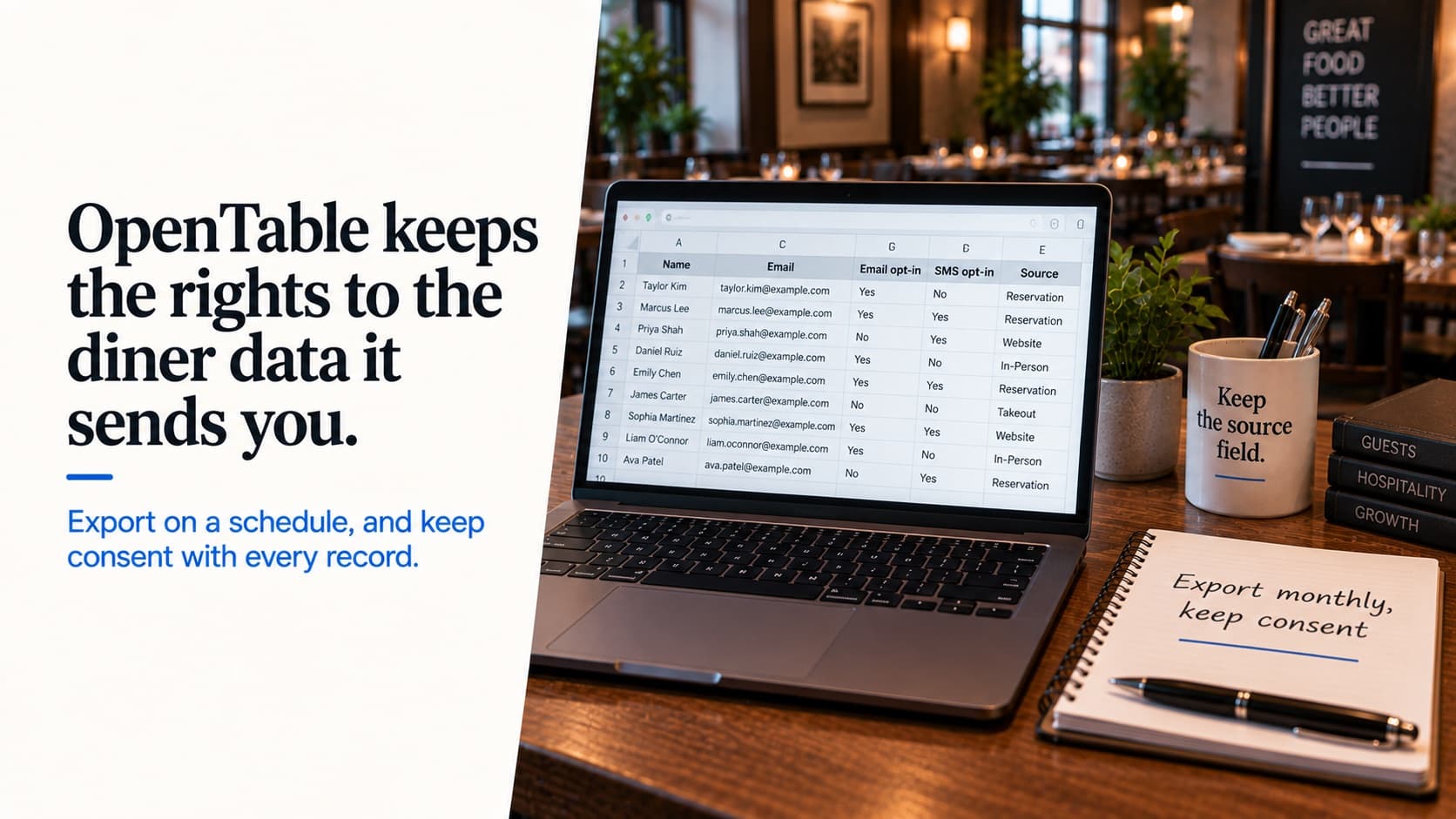
The deeper win is what a reservation system does after the guest shows up. When your reservation and table management is linked to the POS, every visit writes back to a guest profile — spend history, favorite table, the allergy, the anniversary. That turns a booking tool into a retention tool: you recognize the regular, you flag the VIP, and you have a contactable record for follow-up. Diners are roughly 3.5x more likely to return after thoughtful follow-up, which is the same engine behind a good loyalty program — and it's the reason a no-show strategy and a retention strategy are really the same project. The mechanics tie directly to what we covered in native reservations and table management for loyalty.
The bottom line
Disclosure: I work at Katalyst, and we build native reservations that write back to the guest record, so read the source accordingly. But the data here isn't ours — it's operator data from across the reservation platforms, and it points the same way: reminders for everyone, holds for the prime tables, deposits for the highest-stakes bookings, and a guest record that turns a one-time booking into a returning regular. The empty reserved table is the one loss in this business you can actually engineer away. Most operators just never set up the ladder.
Related Katalyst products
See how Katalyst handles your service style
A 30-minute walkthrough of the platform, tuned to how your restaurant actually runs.