Choosing the right POS system for your restaurant: Katalyst vs. Aloha, Toast, and Square — Boston, MA
How Katalyst stacks up against Aloha, Toast, and Square in the Boston restaurant POS market — features, pricing, and which system fits your operation.


Selecting the right point-of-sale (POS) system can make or break a restaurant’s efficiency, profitability, and customer experience. With so many options available, it’s crucial to understand how leading platforms stack up. Today, we’re comparing Katalyst, Aloha, Toast, and Square — four major players in the restaurant POS market.
Katalyst: built by restaurateurs, for restaurateurs
Katalyst is more than just a POS system — it’s an all-in-one restaurant management platform designed by restaurant owners. Unlike traditional POS systems, Katalyst integrates every critical function into a single dashboard, from order management to advanced analytics.
Key features:
- 200+ KPIs for data-driven insights: Real-time reporting on sales, labor, and inventory.
- Automated scheduling: AI-driven staffing recommendations based on peak hours.
- Integrated payments: Seamless transactions with industry-low processing fees.
- Customizable loyalty programs: Personalized offers to boost customer retention.
- Real-time menu updates: Instantly modify online and in-house menus.
Pros:
- All-in-one platform with advanced analytics.
- User-friendly iOS interface.
- Lower processing fees through Fiserv partnership.
- Dedicated customer support with industry expertise.
Cons:
- Requires iPads for full functionality.
- Best suited for full-service restaurants and multi-location operations.
Aloha: the legacy system
Aloha, a long-standing player in the POS market, is known for its stability and extensive feature set. However, its legacy architecture can feel outdated compared to newer platforms.
Key features:
- Robust order management.
- Inventory and labor tracking.
- Loyalty and gift card programs.
Pros:
- Reliable, time-tested platform.
- Comprehensive feature set for large operations.
Cons:
- Complex interface with a steeper learning curve.
- Requires significant upfront hardware investment.
- Limited real-time data insights compared to Katalyst.
Toast: popular choice for modern restaurants
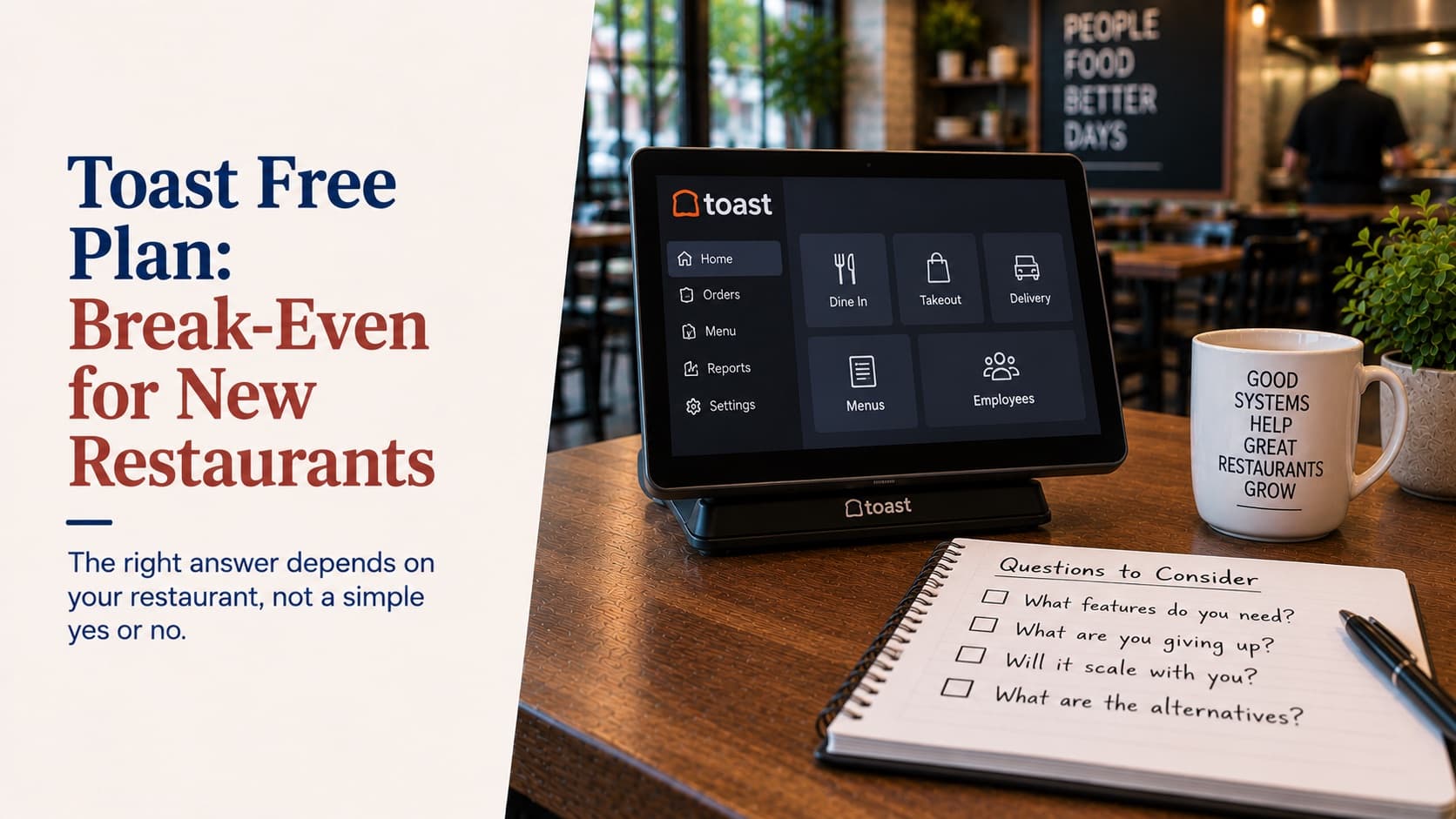
Toast has gained popularity for its cloud-based platform and user-friendly design. It’s especially popular with quick-service restaurants (QSRs).
Key features:
- Cloud-based system accessible from any device.
- Online ordering and delivery integration.
- Employee scheduling and payroll.
Pros:
- Easy to use and set up.
- Strong online ordering and delivery features.
Cons:
- Higher payment processing fees.
- Limited advanced reporting compared to Katalyst.
Square: ideal for small restaurants and cafés
Square is known for its simplicity and affordability, making it a go-to choice for small, independent restaurants and coffee shops.
Key features:
- Free basic POS with optional paid features.
- Built-in payment processing.
- Simple inventory tracking.
Pros:
- Affordable with no monthly fees for the basic plan.
- Easy to set up and use.
Cons:
- Limited functionality for larger restaurants.
- Higher processing fees compared to Katalyst.
Which POS system should you choose?
The right choice depends on your restaurant’s size, needs, and goals:
- Choose Katalyst if you need an all-in-one platform with advanced analytics, AI-driven insights, and low processing fees.
- Choose Aloha if you prefer a legacy system with robust features but can manage a more complex setup.
- Choose Toast if you want a modern, cloud-based solution with strong online ordering.
- Choose Square if you run a small café or food truck and prioritize affordability and ease of use.
Final thoughts
While each platform has its strengths, Katalyst stands out for its comprehensive functionality, real-time analytics, and user-friendly design. It’s the only system built by restaurateurs who understand the challenges of running a restaurant firsthand.
To see how Katalyst can transform your restaurant operations, visit katalystos.com.
Related Katalyst products
Topics
See how Katalyst handles your service style
A 30-minute walkthrough of the platform, tuned to how your restaurant actually runs.